
What to Do When You Have a Serious Plumbing Emergency: A Flooding Commercial Toilet
A customer called Horizon Commercial Plumbing with a flushometer running wild and water spilling across the restroom floor. Eddie was on-site and fixed it — here's exactly why it happened, and what to do in the first 60 seconds.
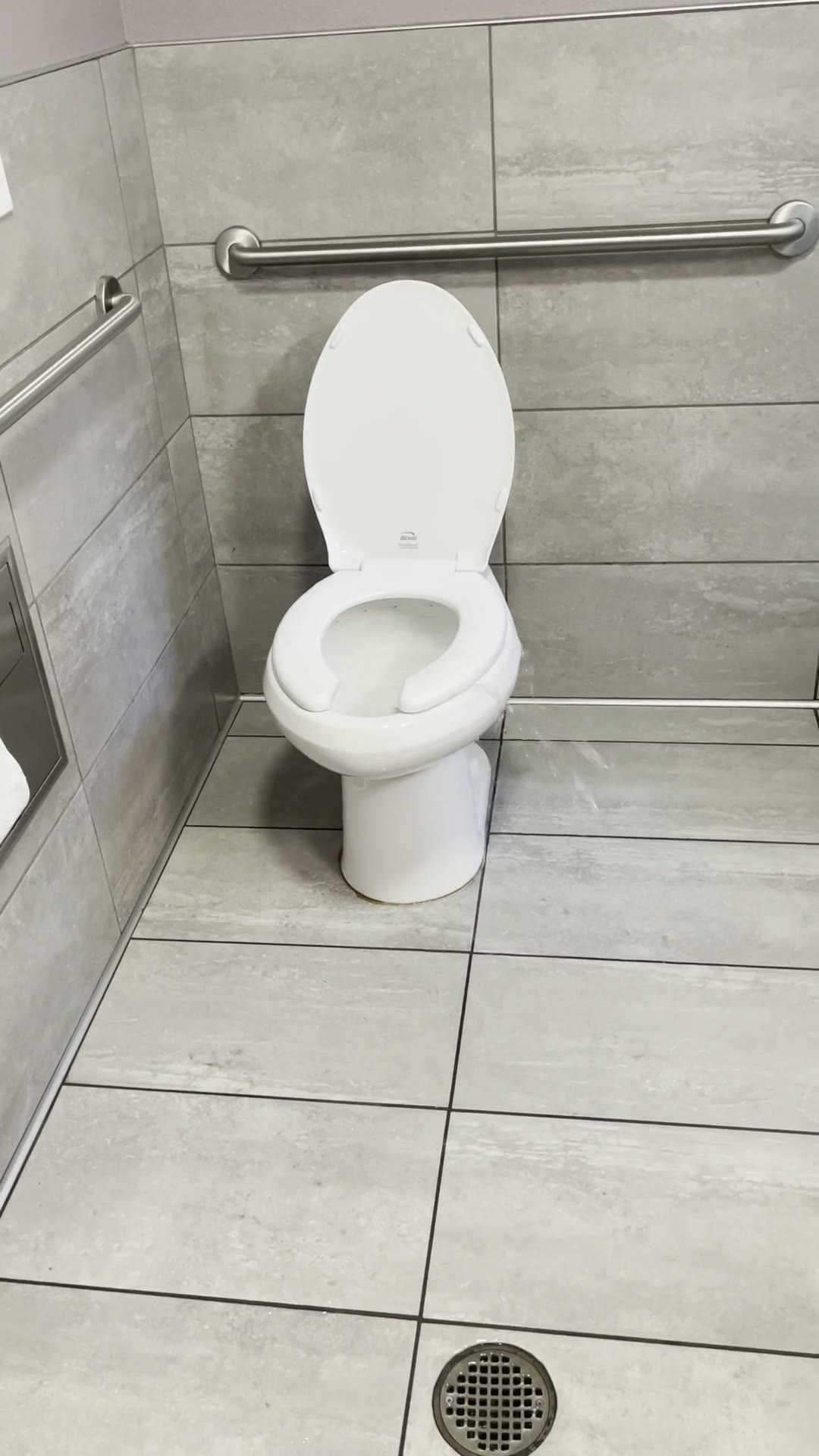
When a commercial toilet floods, you have minutes — not hours — before water is under the partitions, out the door, and into the hallway. That's exactly what happened on a recent call to Horizon Commercial Plumbing. The toilet wouldn't stop. The bowl kept filling. The floor was already wet. Watch what an active flushometer flood actually looks like before the shut-off is closed:
Why commercial toilets flood so fast
Commercial toilets are not the same animal as the one in your house. There is no tank. Instead, public restrooms use high-pressure, tankless flushometer valves wired directly into the building's water supply. That means when something goes wrong, the flood escalates in seconds — not minutes.
The most common causes
- Non-flushable debris and clogs — paper towels, feminine hygiene products, and thick wet wipes are the usual culprits in heavy-traffic restrooms.
- Malfunctioning flush valves — the internal rubber diaphragm has tiny bypass holes ("weep holes"). When sediment or grit blocks them, the valve gets confused and the toilet flushes continuously, overflowing the bowl because the water never stops.
- Water pressure set too high — commercial buildings need real pressure to move waste, but if it's cranked up, water enters the bowl faster than the drain can clear it.
- Main line blockage — if multiple stalls back up at once, or the flooding is random across the building, the problem isn't this toilet. It's the building's main sewer line.
What to do in the first 60 seconds
Before you call anyone, stop the water. Locate the shut-off valve — it's usually on the pipe directly beneath or beside the toilet, or on the flushometer itself. Twist it clockwise until it stops. That cuts the supply and gives you a dry floor to work with.
Once the water is off, take a breath. The emergency is contained. Now you can call a commercial plumber without the clock ticking against you.
Why this is a job for a commercial specialist
Residential plumbers can do a lot, but flushometer valves, building pressure regulators, and commercial main lines are a different skill set. Horizon Commercial Plumbing has been doing exactly this kind of work for 25+ years, 24/7, across Los Angeles. On this call, Eddie diagnosed the failing flush valve, replaced what needed replacing, and had the restroom back in service the same visit.
"Isn't it nice to have a great plumber on call?"
If you manage a building, ask yourself three questions
- Are you trying to prevent routine blockages across multiple restrooms? You probably need a scheduled maintenance plan, not a one-off repair.
- Are you fixing a single toilet that keeps running? That's almost always a flushometer diaphragm — a fast, inexpensive part swap if you catch it early.
- Is the issue in one stall, or multiple at once? One stall is the fixture. Multiple stalls is the main line. They are very different repairs.
The bottom line
Commercial plumbing emergencies don't wait for business hours. Knowing where your shut-off valve is, and having a 24/7 commercial pro saved in your phone before you need one, is the difference between a 30-minute repair and a full insurance claim. Horizon Commercial Plumbing answers the phone at 2am for exactly this reason.
Horizon Commercial Plumbing — (661) 382-7562 — horizoncommercialplumbing.com.